Tryon Palace
529 South Front Street New Bern, NC 28562
Brief History
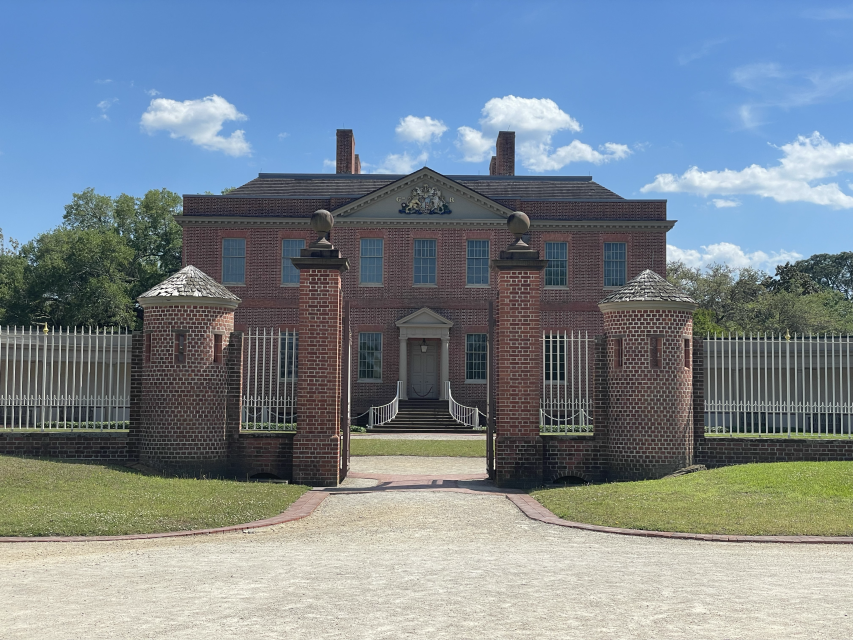
In 1767, construction began in New Bern, North Carolina for the first permanent capitol and governor’s mansion, known today as Tryon Palace. Completed in 1770, the building was home to the last two Royal Governors – William Tryon and Josiah Martin – and the first North Carolina State Governor, Richard Caswell. In 1798, a fire destroyed the building. Following a 30-year campaign to rebuild the structure, Tryon Palace opened as a historic site in 1959. The larger site complex includes the rebuilt Palace and kitchen office and the restored original stable office, along with acres of gardens, numerous historic homes, and the North Carolina History Center. It is a place to learn about the history of the state and region, and to contemplate New Bern’s diverse community identity past, present, and future.
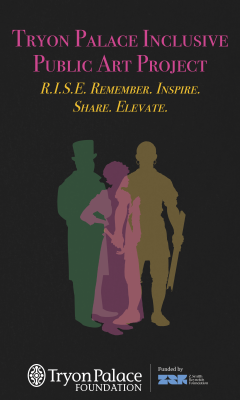
One of the site’s current initiatives – the Inclusive Public Art Project – will install a permanent and community-driven sculpture this summer in downtown New Bern. The installation celebrates New Bern’s large community of free and enslaved African American artisans from 1770-1900. Three contemporary North Carolina artists – Georgie Nakima, Stephen Hayes, and Marcus Kiser – are collaboratively designing a vibrant sculpture inspired by Catherine Bishir’s book, "Crafting Lives: African American Artisans in New Bern, North Carolina, 1770-1900." The project, funded by a grant from the Z. Smith Reynolds Foundation, honors the craftspeople who shaped New Bern’s landscape, material culture, and community.
Black artisans provided industries that were vital to the town’s growth and sustainability, they established religious and civic organizations, and at times, they used the profits from their crafts to buy themselves and their families out of slavery and into freedom.
Amelia Green
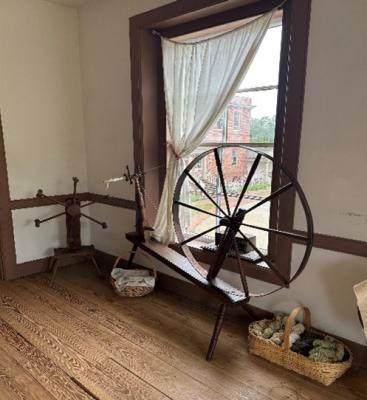
Amelia Green (ca. 1740 – ca. 1823) was born into enslavement in New Hanover County yet went on to secure not only her own freedom, but the freedom of at least three of her children: daughters, Nancy Handy, Harriet Green, and Princess Green. Amelia was also part of a larger family of emancipators: her daughter, Nancy Handy, emancipated her own children, and Amelia’s son-in-law, John Carruthers Stanly, assisted many on their journey to freedom, though he also was a prominent enslaver himself.
The historical records on Amelia Green are primarily from the legal petitions she filed to emancipate members of her family. They don’t tell us much about what Green’s daily life looked like. Yet we know she was a homeowner and a craftswoman. The inventory taken of her estate when she died was short, but it mentioned two spinning wheels: one for wool and one for linen. These were the tools of a skilled artisan who spun threads to secure her family’s freedom.
Donum Montford (Mumford)
Donum Montford (1771-1838) was a successful plasterer and brick mason working around the turn of the century. Enslaved by the Cogdell family, Montford was sold in 1804 to John Carruthers Stanly (Amelia Green’s son-in-law) and emancipated the following day (one of the numerous individuals Stanly emancipated the day after purchase).
Montford became a prominent community member, a landowner, and an enslaver. He was instrumental in apprenticing, training, and emancipating or assisting in the emancipation of many enslaved individuals and artisans throughout his life, helping to grow New Bern’s community of Black craftspeople. Montford contributed to multiple prominent buildings in New Bern, including the construction of the John R. Donnell House and the Craven County Jail, and to repairs on Christ Episcopal Church, where he and his wife, Hannah, were buried.
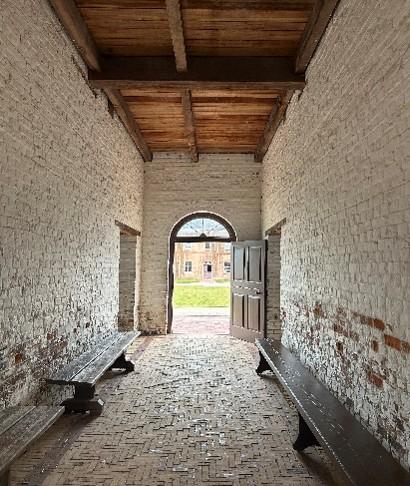
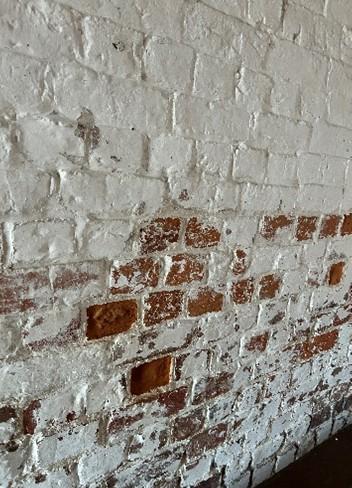
The original Stable Office still stands on site, built with bricks from the 1760s. Montford, born after this construction, became an expert in this technical skill.