
Dr. Charlotte Hawkins Brown
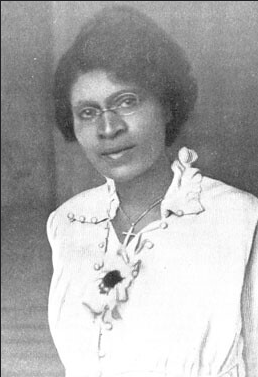
Born in 1883 in Henderson, North Carolina, to descendants of enslaved people, Dr. Charlotte Hawkins Brown was an educational pioneer for Black North Carolinians. Moving to Cambridge, Massachusetts, as a young child, Dr. Brown was noted as always being an exceptional student and caught the eye of educator and former president of Wesley College, Alice Freeman Palmer, later becoming her mentee. Dr. Brown returned to North Carolina with the passion of expanding educational opportunities for southern African Americans and began teaching in Sedalia, NC. Upon the closing of the school she was teaching in, Dr. Brown, through the encouragement and financial connections of her students, their parents, and her northern network, purchased a blacksmith shed across the street and began laying the groundwork for a fully functioning campus. In 1902, the Palmer Memorial Institute (PMI), started operations as a rural African American school. Dr. Brown was only 19 years old at the time. Early course offerings included agricultural and vocational training and later expanded to college preparatory education, liberal arts studies, and etiquette. PMI quickly became known as the premiere boarding school for middle class African Americans producing internationally known professionals. Dr. Brown was president of PMI for 50 of the 69 years the school was in operation. Dr. Brown retired from the campus in 1952, and after battling a long illness, passed away in 1961. She was buried on the grounds of PMI with great honor. Witness the trailblazing voice of Dr. Charlotte Hawkins Brown by visiting North Carolina Freedom Park in Raleigh, NC, where she is featured, and Charlotte Hawkins Brown Museum, the site of the Palmer Memorial Institute, in Gibsonville, NC.
Learn More About Dr. Charlotte Hawkins Brown with State Historic Sites
Harriet Jacobs
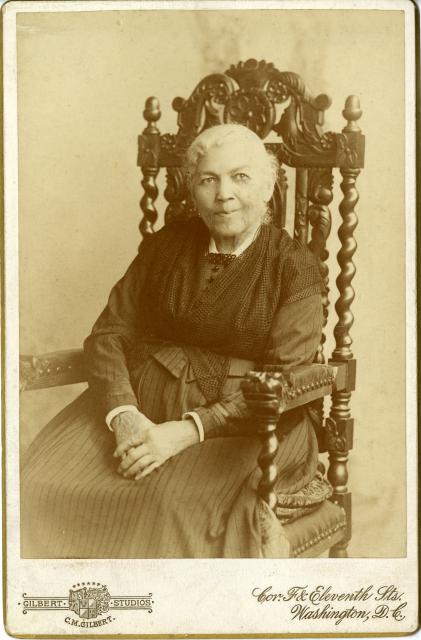
Born into slavery in Edenton, North Carolina, in 1813, Harriet Jacobs was a renowned abolitionist and the first woman to write an autobiography that delved into the striking realities of slavery for women. At the age of 12, Jacobs became a victim of prolonged sexual abuse at the hands of her enslaver, only finding reprieve from a local attorney who later fathered two children with her. In an attempt to save herself and her children from abuse from her enslaver, in 1835, Jacobs hid in a tiny crawlspace in the home of her grandmother who was a free woman. Her grandmother's home was a block away from her enslaver. The crawlspace was nine feet long and seven feet wide. Jacobs could barely move and often felt mice and rats crawl over her body. There was also hardly any light or ventilation. To watch her children play outside, Jacobs drilled a peephole into the wall. She lived in the crawlspace for seven years, coming out only for brief periods at night for exercise. In 1842, Jacobs made her escape to freedom to Philadelphia and then New York City where she was reunited with her daughter. Jacobs lived in constant fear and anxiety that she could be recaptured until she legally obtained her freedom in 1852. She later became involved with the abolitionist movement and began writing her autobiography, Incidents in the Life of a Slave Girl. The book was published in 1861 under the pseudonym ‘Linda Brent’. It is one of the first books to speak on the sexual violence, the challenges of motherhood, and the many harsh realities enslaved women had to endure. Witness the trailblazing voice of Harriet Jacobs by visiting North Carolina Freedom Park in Raleigh, NC, where she is featured, and in Edenton with Historic Edenton.
Read more of Harriet Jacobs with Incidents in the Life of a Slave Girl
Golden Frinks
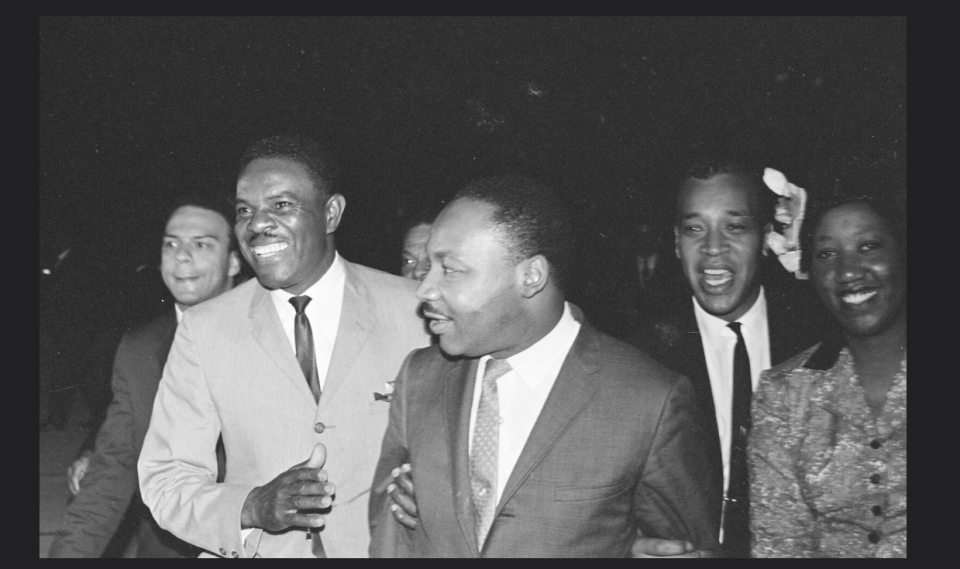
Known as “The Great Agitator,” Golden Asro Frinks was a political activist who worked towards desegregating Edenton, North Carolina. Frinks was born on April 26, 1920 in Wampee, SC. The Frinks family moved to Tabor City, NC, when Golden was 9 years old. Early in his life, Frinks participated in political actions, joining the Youth Improvement Society in Edenton, NC, and the Black Democratic Club in Virginia. After witnessing civil disobedience tactics in the U.S. Army, Frinks went back to Edenton where he began leading hundreds of people, mostly youth, to try and desegregate the town using nonviolent tactics such as sit-ins, protests, demonstrations, and marches. Frinks frequently spoke out against the discriminatory practices of town council and commissioners and organized several civil rights protests, leading to being arrested 87 times, and what would later be deemed the “Edenton Movement” of civil rights. In 1962, Martin Luther King Jr. visited Edenton to commend the work of Frinks and the town's civil rights movement, and in early 1963 Frinks was hired as a field secretary for the Southern Christian Leadership Conference (SCLC) in recognition of his organizing. Just some of his many actions included leading a boycott for the desegregation of the Hyde County school district which lasted the entire school year in 1968, and helping to organize a 250-mile march from Asheville to Raleigh on the one-year anniversary of Dr. Martin Luther King Jr’s assassination. Frinks passed away on July 19, 2004, in Edenton at age 84. His home in Edenton, a place of community action, has since been acquired as a historic site by the North Carolina Department of Natural and Cultural Resources. Witness the trailblazing voice of Golden Frinks by visiting North Carolina Freedom Park in Raleigh, NC, where he is featured, and his home, Freedom House, in Edenton, NC, which is a part of the NC Civil Rights Trail.
Learn More About Golden A. Frinks with Freedom House of the NC Civil Rights Trail
David Walker
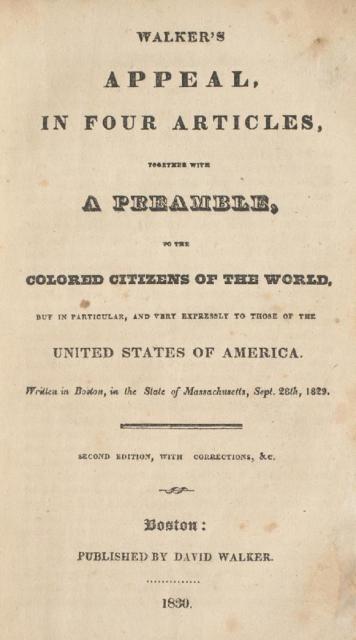
Born in Wilmington, North Carolina, to an enslaved father and a free Black mother, David Walker was born a free man. He still, however, witnessed firsthand the injustices of slavery. Walker decided to settle in Boston, but even there, in a free city within the North, he witnessed Black residents face discrimination. The injustices Walker experienced in life led him to become a business leader and an activist. Realizing the power of writing words to impact and enact change, Walker became a writer for the first African American newspaper in the nation, “The Freedom's Journal” based in New York City. A year before his passing, in 1829 David Walker published his Appeal to the Colored Citizens of the World, widely known as David Walker’s Appeal. In this Appeal, Walker encouraged resistance among free and enslaved Black communities. He also condemned those who upheld slavery. David Walker passed away in 1830 at the age of 33. Witness the trailblazing voice of David Walker by visiting North Carolina Freedom Park in Raleigh, NC, where he is featured.
Dr. Anna Julia Cooper
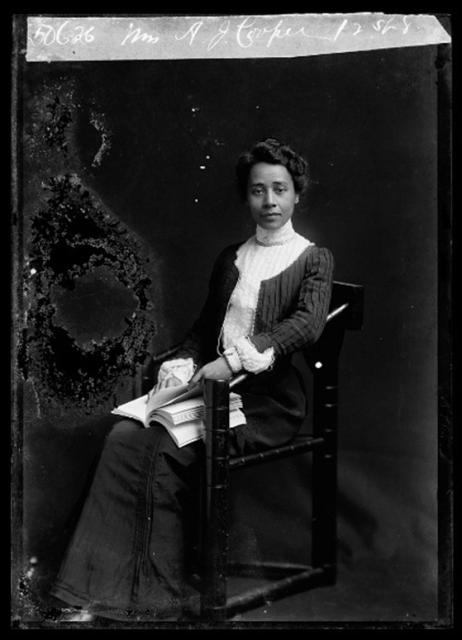
Born enslaved in Raleigh, NC, in 1858, Dr. Anna Julia Cooper was an educator, activist, and feminist. Soon after emancipation, at 9 years old Cooper enrolled in Saint Augustine Normal and Collegiate Institute. While there, Cooper organized one of the earliest protests at the institute. Standing against educational gender disparities, Cooper demanded equal academic opportunities between male and female students. Excelling in her courses she began teaching at Saint Augustine upon graduation. In 1881, Cooper attended Oberlin College and received her bachelor's in mathematics in 1884 and went on to receive an honorary master's degree in mathematics in 1887. Cooper was only 23 at the time and still championed for equal academic conditions while at Oberlin. In 1892, Cooper compiled a collection of essays and speeches and published A Voice from the South by a Black Woman in the South, a work that addressed topics of race, class, education and southern identity, especially for African American women. A Voice from the South went on to be considered the first major work of Black feminist theory. As a testament to her ideologies, Cooper continued to educate while also helping to found the Colored Women’s National League in Washington, DC and participating in conferences for African American women. In 1925, Cooper earned her doctorate from the University of Paris, Sorbonne, making her the fourth Black woman in the United States to earn a PhD. Dr. Anna Julia Cooper passed away at the age of 105 and is buried in the Raleigh City Cemetery. Witness the trailblazing voice of Anna Julia Cooper by visiting North Carolina Freedom Park in Raleigh, NC, where she is featured.
Dr. James E. Shepard
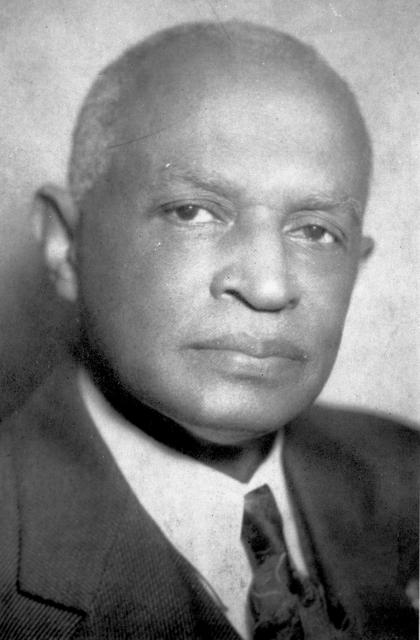
Born November 3, 1875, in Raleigh, North Carolina, James E. Shepard was one of North Carolina’s most prominent figures. Having earned his degree in pharmacy from Shaw University in 1894, he opened a pharmacy in Durham, North Carolina. Shepard was a businessman and educator. He is most notable for founding the National Religious Training School and Chautauqua, a Black educational institution located in Durham, North Carolina. The school was later renamed the North Carolina College for Negroes and in 1969 was given the current name North Carolina Central University (NCCU). Along with founding NCCU, Shepard also was one of the original incorporators of the Mechanics and Farmers Bank and one of the first seven investors in the North Carolina Mutual Life Insurance Company in Durham. These were some of the most successful Black-owned businesses in North Carolina and the nation, helping to establish Durham’s own Black Wall Street. James Shepard continued to champion for Black educational and financial freedom for the Durham community until his passing in 1951. He is buried in Durham in Beechwood cemetery. Witness the trailblazing voice of James E. Shepard by visiting North Carolina Freedom Park in Raleigh, NC, where he is featured.
Learn More About Dr. James E. Shepard with North Carolina Central University
Abraham Galloway
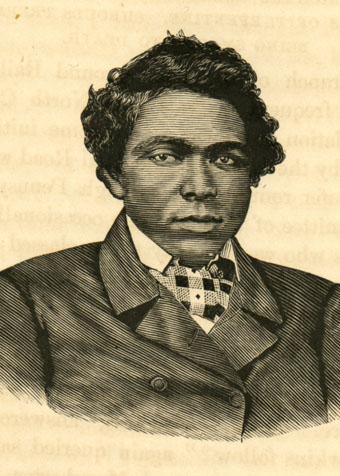
Born enslaved in Smithville, North Carolina, in 1837, Abraham Galloway sought freedom in 1857 by stowing away on a turpentine ship bound for Philadelphia. There he joined the abolition movement. He was an agent of the Underground Railroad and fought to end slavery in the United States. During the Civil War, Galloway served as a spy and a recruiter for the Union Army. In 1864, leading a delegation of Black southern representatives, Galloway met with President Abraham Lincoln. Galloway served on the John Brown Chapter of the Equal Rights League. In September of 1865, Galloway and the league organized North Carolina’s first Freedmen’s Convention in Raleigh. In 1868, Galloway was among the first Black men to be elected to serve in North Carolina’s State Senate. Galloway served in that capacity until his death in 1870 due to illness. He was just 33 years old. Witness the trailblazing voice of Abraham Galloway by visiting North Carolina Freedom Park in Raleigh, NC, where he is featured.
Read more of Abraham Galloway with The Fire of Freedom: Abraham Galloway & the Slaves' Civil War
Rev. Dr. Pauli Murray
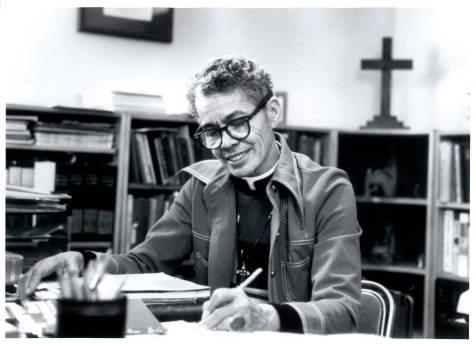
Rev. Dr. Pauli Murray was born in Baltimore, MD, on Nov. 22nd, 1910, and was raised by extended family in Durham, NC. Murray became a prominent advocate for Civil Rights and Women's Rights working alongside advocates such as First Lady Eleanor Roosevelt, Bayard Rustin, and Ruth Bader Ginsburg among many others. In 1938, they petitioned to enter graduate school at the segregated University of North Carolina. Although this gained media attention, they were denied enrollment. Murray attended law school at Howard University and graduated at the top of their class. In those years at Howard University, Murray coined the term “Jane Crow” to acknowledge the layered discrimination that Black women faced. They were also the first Black person to earn a Doctor of the Science of Law degree from the Yale Law School. In 1966, they were one of the founders of the National Organization for Women. In 1977 they became the first Black woman to be ordained as an Episcopal priest. Murray was a published writer and poet with some of their most famous works being Dark Testament and Proud Shoes: The Story of an American Family. Witness the trailblazing voice of Pauli Murray by visiting North Carolina Freedom Park in Raleigh, NC, where she is featured.
Learn More About Rev. Dr. Pauli Murray with the Pauli Murray Center for History and Social Justice