Africa to Carolina Curriculum Development
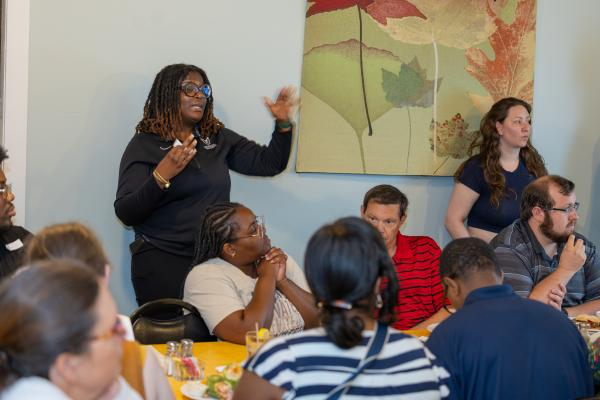
The North Carolina African American Heritage Commission (NCAAHC) developed curriculum for K-12 classrooms designed for use in social studies, history, and art instruction. Education & Interpretation Specialist Shafantae Desinord, Ph.D., led this initiative in partnership with Carolina K-12 and INSITE Africa (African Studies Center) at the University of North Carolina at Chapel Hill.
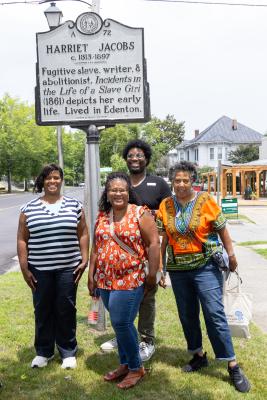
Dr. Desinord worked closely with these organizations, DNCR’s Learning Happens Here | DNCR K12 Initiative, and educators statewide to define curriculum parameters and coordinate professional development opportunities. A workshop, planned as a two-day immersive experience, equipped teachers with effective strategies and resources for teaching the new curriculum. Participants benefited from sessions with university and local historians, local artists, and guided excursions to historic sites of disembarkation—including Historic Edenton State Historic Site, a walking tour of downtown Edenton, Somerset Place State Historic Site, and the Historic 1767 Chowan County Courthouse.
In total, forty-five K-12 educators from across North Carolina participated in these experiences, traveling to Edenton (2025) and Wilmington (2026). The workshops included educator training sessions, lectures, and site tours, allowing participants to engage deeply with the "Africa to Carolina" project and explore ways to integrate its history and lessons into K-12 classrooms statewide. Additional professional development field experiences took place at North Carolina educator conferences, further connecting educators, resources, and important heritage sites
North Carolina Public School Collaborations
Please see the map below, with the public school counties that participated in the Africa to Carolina K-12 Educator Field Experience highlighted in orange. To learn more about each school district, please click the highlighted counties.
The counties identified on the map above are New Hanover, Brunswick, Rockingham, Wake, Franklin, Durham, Henderson, Haywood, Pitt, Guilford, Craven, Stanly, Cabarrus, and Lenoir.
North Carolina State Historic Sites Collaborations
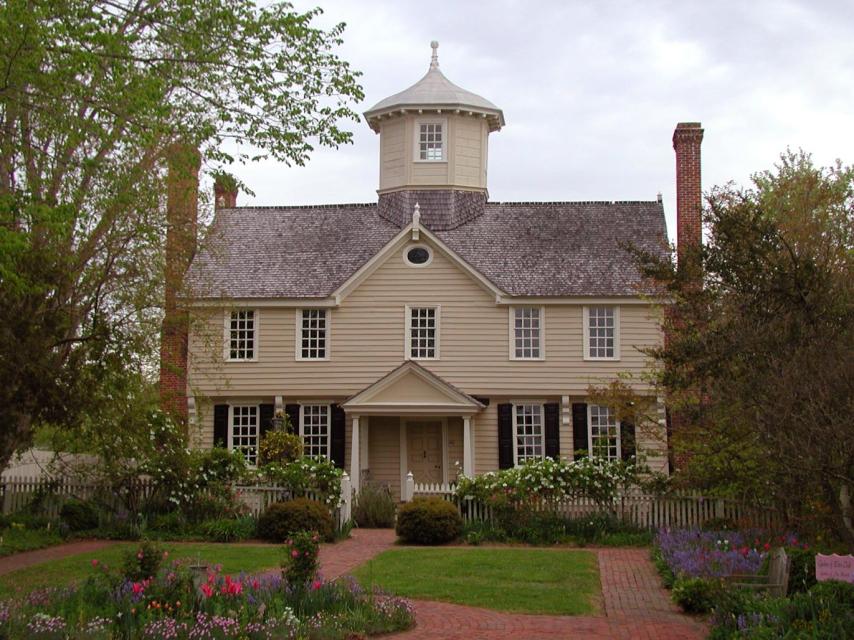
Featuring 18th- and 19th-century history, North Carolina's second-oldest town, Edenton, was one of the fledgling nation's chief political, cultural, and commercial centers. The state's first colonial capital, it was established in the late 17th century and incorporated in 1722. Once its second-largest port, Edenton provided enslaved people with a means of escape via the Maritime Underground Railroad before emancipation. Today it features an extensive historic district with architectural styles spanning 250 years, such as the 1767 Chowan County Courthouse National Historic Landmark.
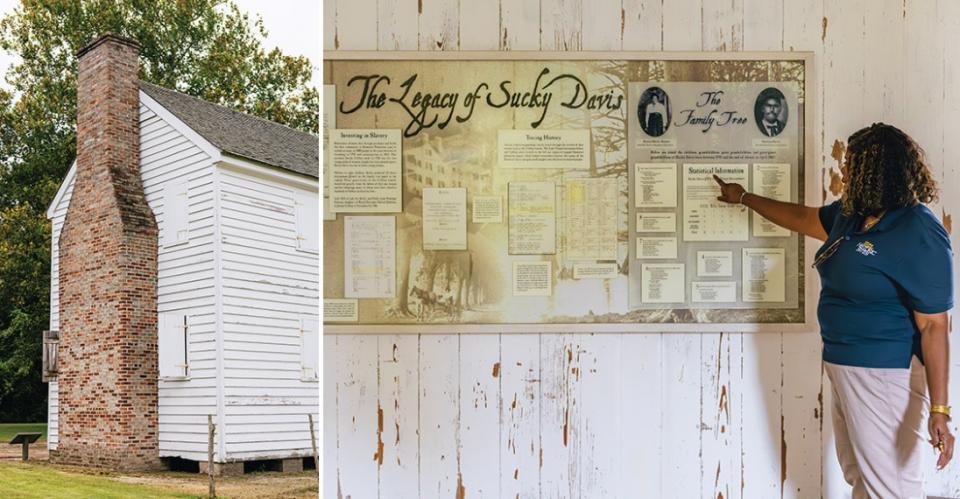
Somerset Place offers a comprehensive and realistic view of 19th-century life on a large North Carolina plantation. Originally, this unusual plantation included more than 100,000 densely wooded, mainly swampy acres bordering the five-by-eight mile Lake Phelps, in present-day Washington County. During its 80 years as an active plantation (1785-1865), hundreds of acres were converted into high yielding fields of rice, corn, oats, wheat, beans, peas, and flax; sophisticated sawmills turned out thousands of feet of lumber. By 1865, Somerset Place was one of the upper South's largest plantations.
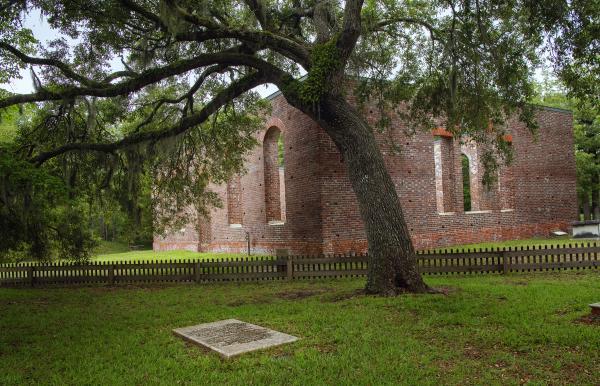
A major pre-Revolutionary port on North Carolina's Cape Fear River, Brunswick was razed by British troops in 1776 and never rebuilt. During the Civil War, Fort Anderson was constructed atop the old village site, and served as part of the Cape Fear River defenses below Wilmington before the fall of the Confederacy. Colonial foundations dot the present-day tour trail, which crosses the earthworks of the Confederate fort.
Brunswick Town / Fort Anderson